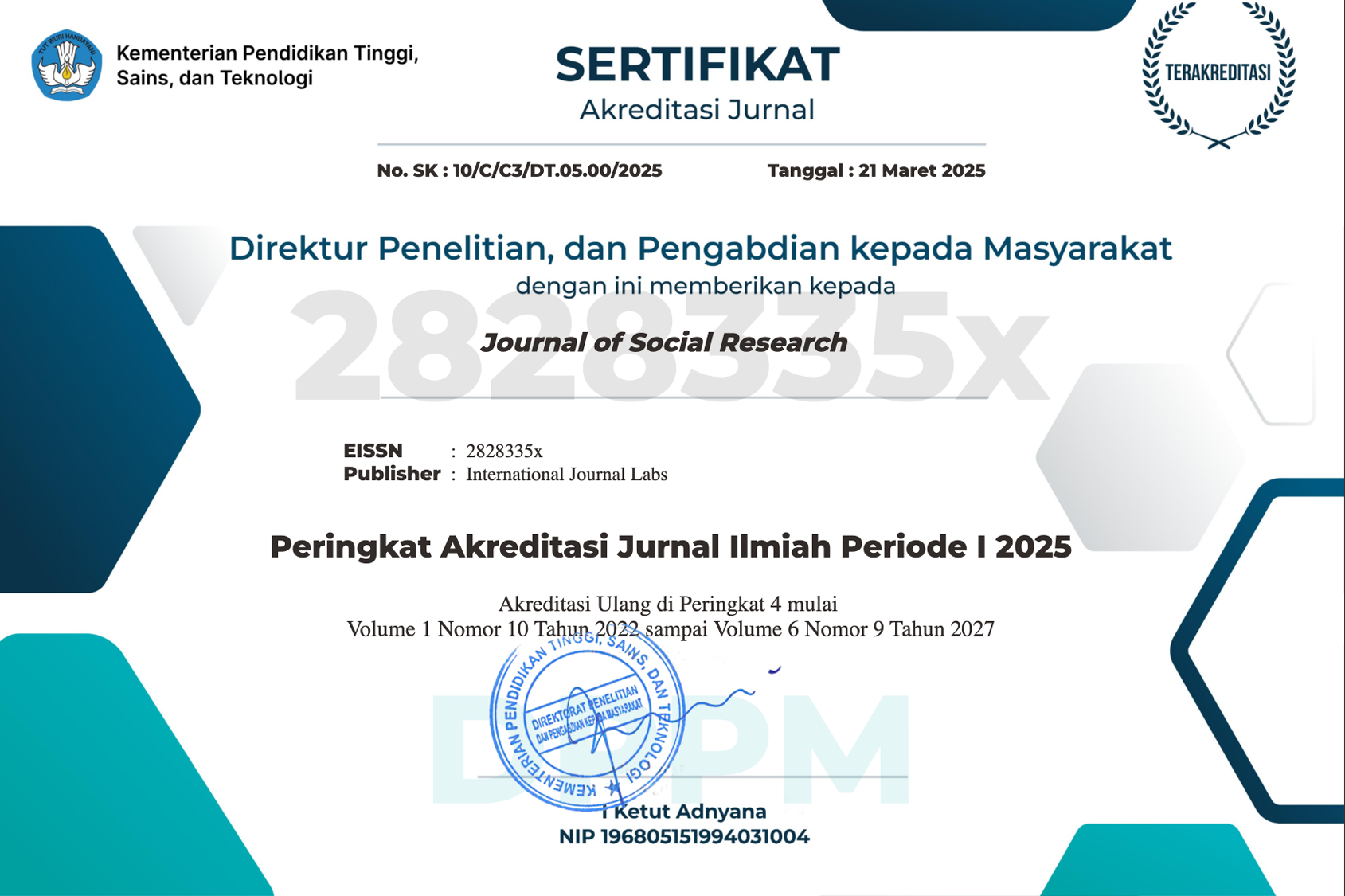
Comparisonal Analysis of Netflix and Viu Service Quality Using Servqual Method
DOI:
https://doi.org/10.55324/josr.v1i12.370Keywords:
Quality of service, Netflix, Servqual, ViuAbstract
Background: The COVID-19 pandemic that is currently engulfing the world, governments in various countries urge people to stay at home, making VoD (Video on Demand) streaming activities as an alternative entertainment for most people experience an increase.
Objective: The purpose of this research is to perform a comparative analysis of service quality on two VoD platforms, namely Netflix and Viu using the Servqual (Service Quality) method.
Methods: The research was conducted by distributing questionnaires through online media to 157 Netflix and Viu users. Service quality in this study was measured using the Servqual method consisting of Tangible, Reliability, Responsiveness.
Results: The results showed that IndiHome customers were not satisfied with the quality of services provided with an average gap of 1,539 (Ulkhaq and Barus, 2017).
Conslusion: Based on the results of this study, it can be concluded that the average gap between reality and expectations on Netflix service quality is 0.41 while the average gap between reality and Viu's expectations is 0.24, in addition, based on the results of hypothesis testing, it proves that the significance value (sig-2 tailed ) of 0.132 and 0.134 for the perception variable. At the 5% significance level, this value is significant because the significance of 0.132 and 0.134 > 0.05 shows that there is no difference in service quality between Netflix and Viu
Published
Issue
Section
License
Copyright (c) 2022 Arvianda Iswandari1, Dina Indarti2,

This work is licensed under a Creative Commons Attribution-ShareAlike 4.0 International License.

This work is licensed under a Creative Commons Attribution-ShareAlike 4.0 International.
Authors who publish with this journal agree to the following terms:
- Authors retain copyright and grant the journal right of first publication with the work simultaneously licensed under a Creative Commons Attribution-ShareAlike 4.0 International (CC-BY-SA). that allows others to share the work with an acknowledgement of the work's authorship and initial publication in this journal.
- Authors are able to enter into separate, additional contractual arrangements for the non-exclusive distribution of the journal's published version of the work (e.g., post it to an institutional repository or publish it in a book), with an acknowledgement of its initial publication in this journal.
- Authors are permitted and encouraged to post their work online (e.g., in institutional repositories or on their website) prior to and during the submission process, as it can lead to productive exchanges, as well as earlier and greater citation of published work.